Company Profile

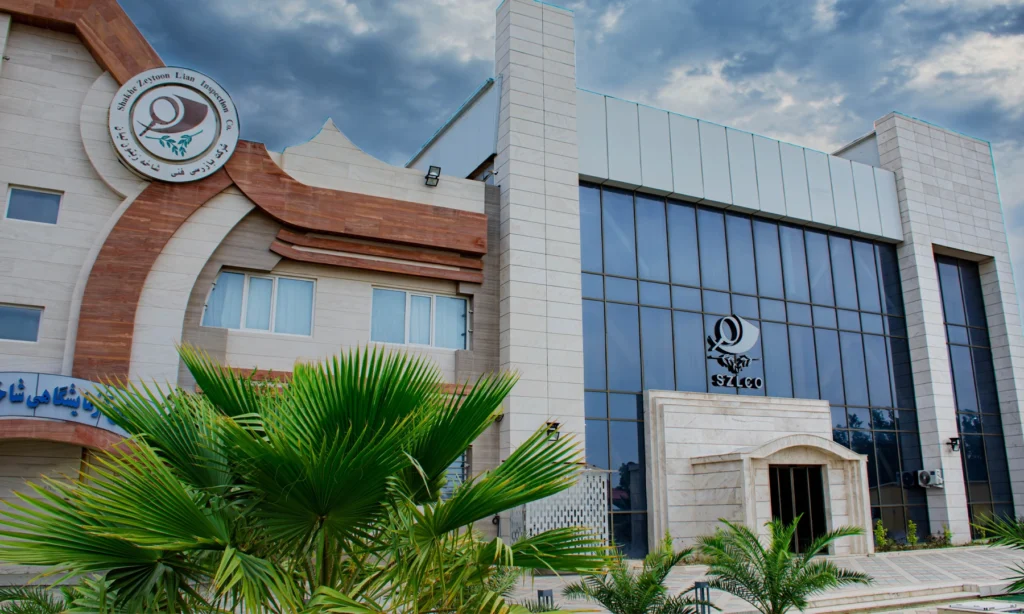
Shakheh Zeytoon Lian Technical Inspection Company and Laboratory Complex, a knowledge-based enterprise, was established in 2009 (1387) with the aim of assessing the quality of domestically manufactured goods and imported and exported products, implementing quality systems in manufacturing units, supporting the proper implementation of standards, meeting consumers’ requirements for consumer goods, promoting the optimal protection of the environment, and contributing to the improvement of public health, food safety, and national hygiene.
The company, drawing on the valuable experience of its founders and the expertise of highly qualified and committed specialists, has established and equipped laboratories in various fields, including food, microbiology, cosmetics and personal care, chemistry and textiles, automotive parts and components, and more. It is worth noting that Shakheh Zeytoon Lian Technical Inspection Company operates under the SZL brand. The company’s activities are categorized into three main areas: laboratory services, technical inspection, and training and consultancy.
about
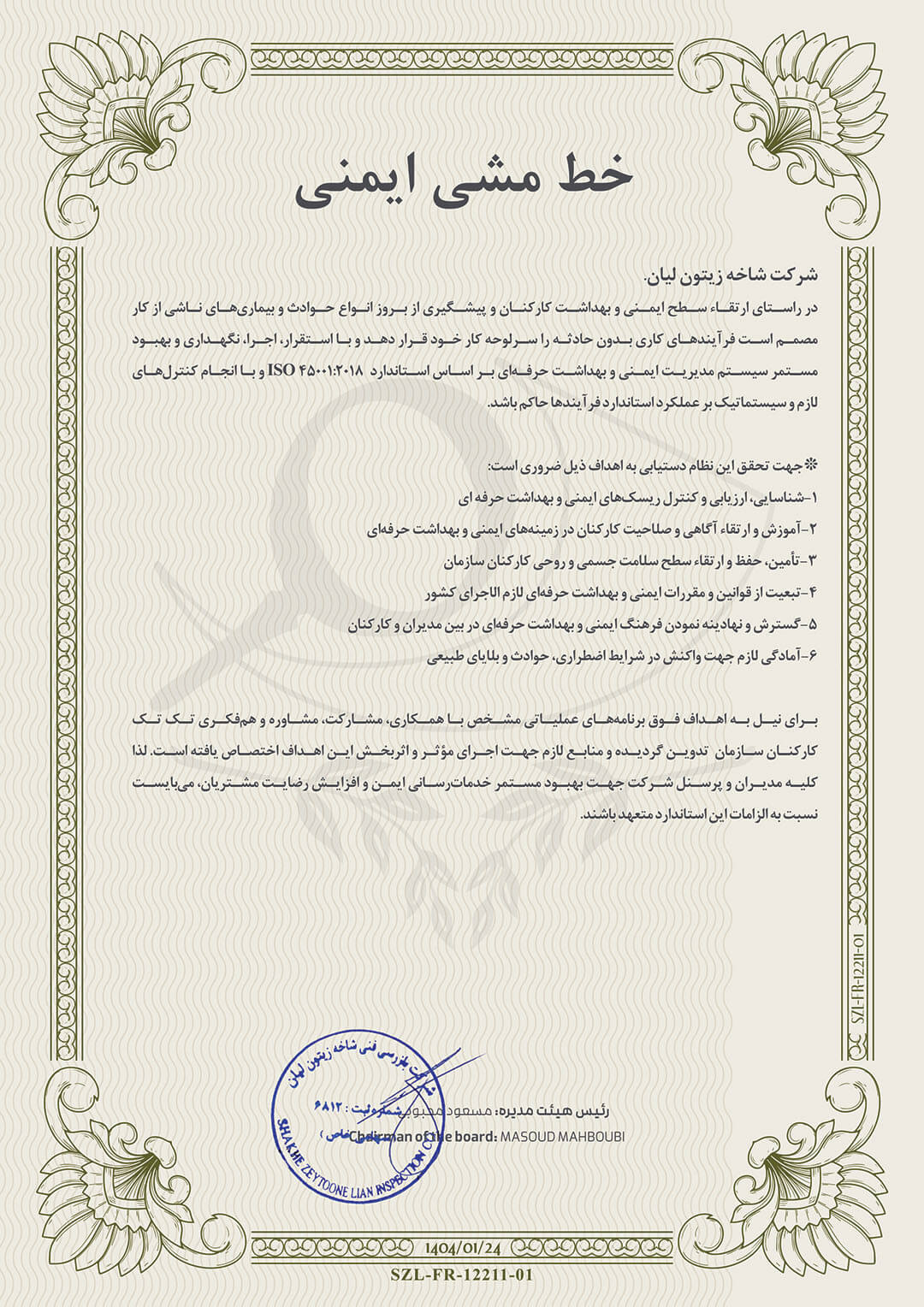
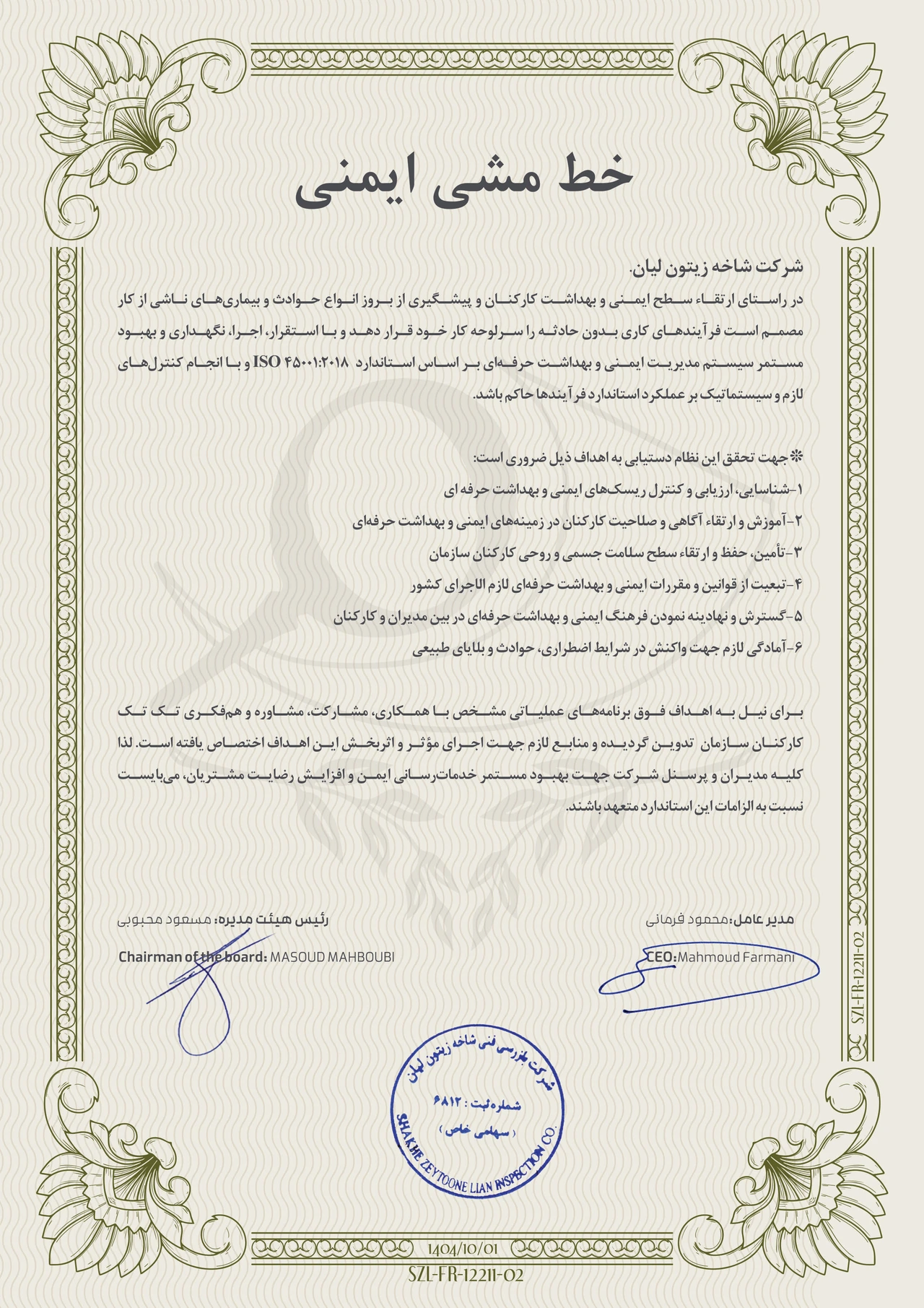
12211 02 خط مشی ایمنی
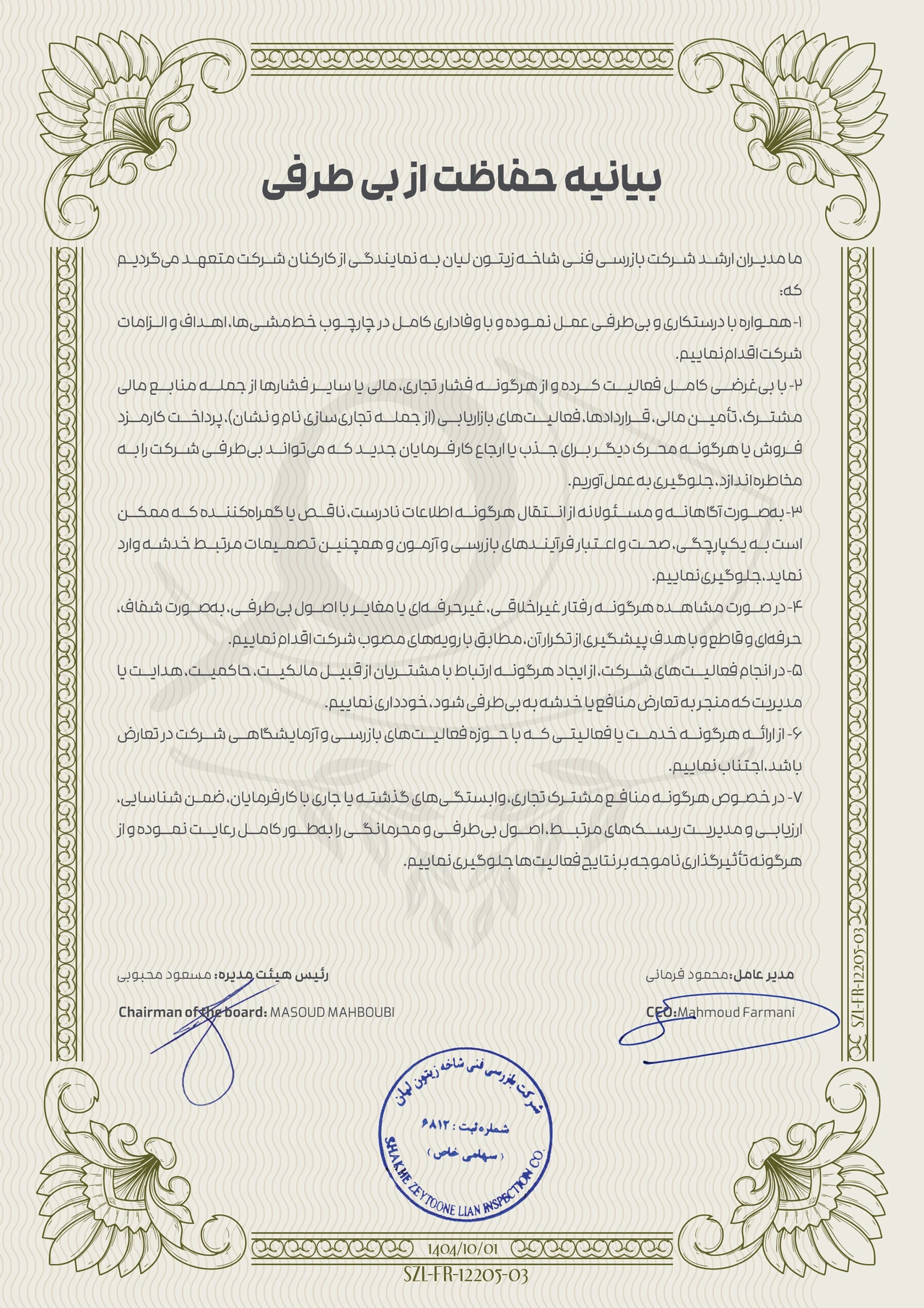
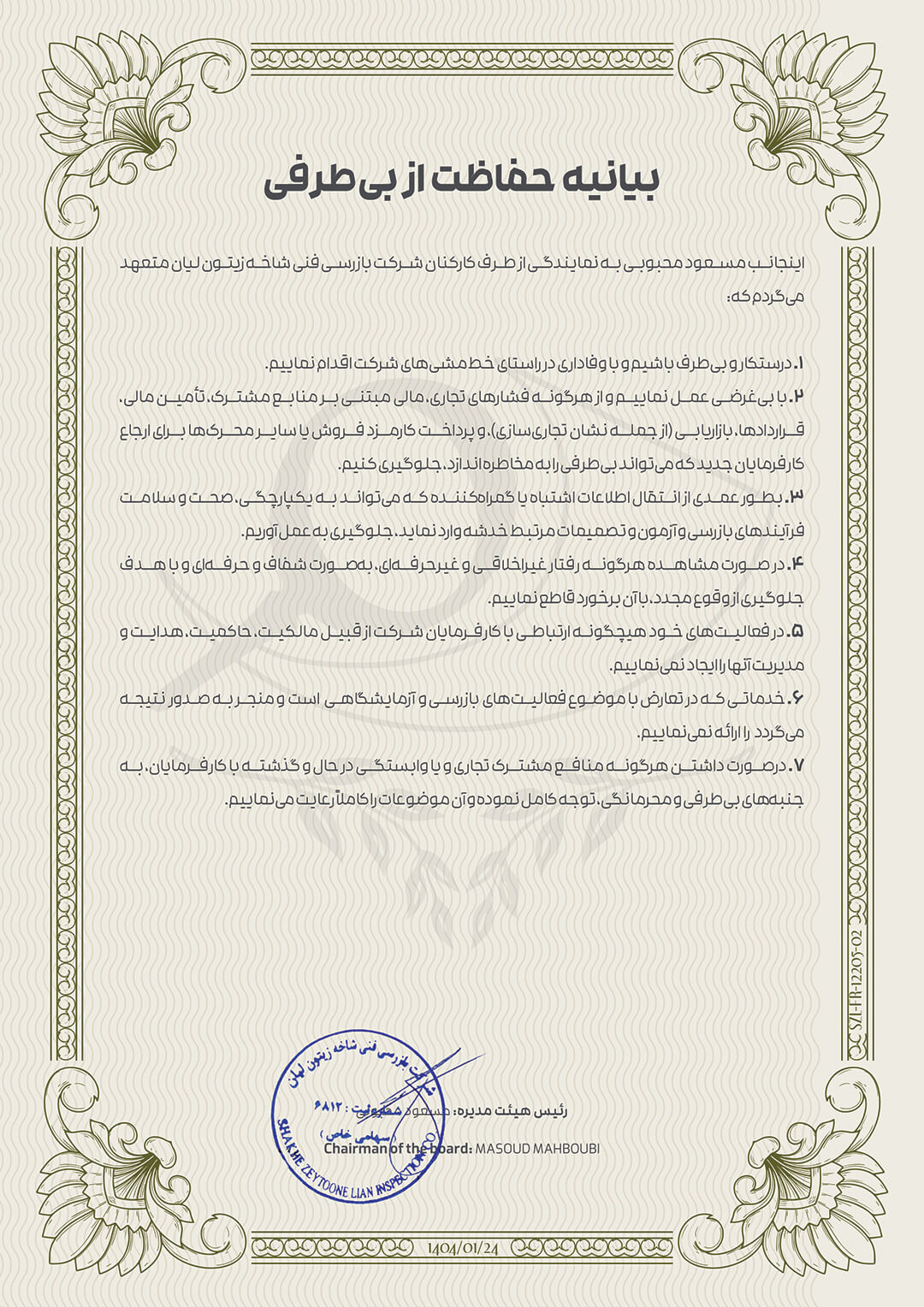
12205 03 حفاظت از بی طرفی
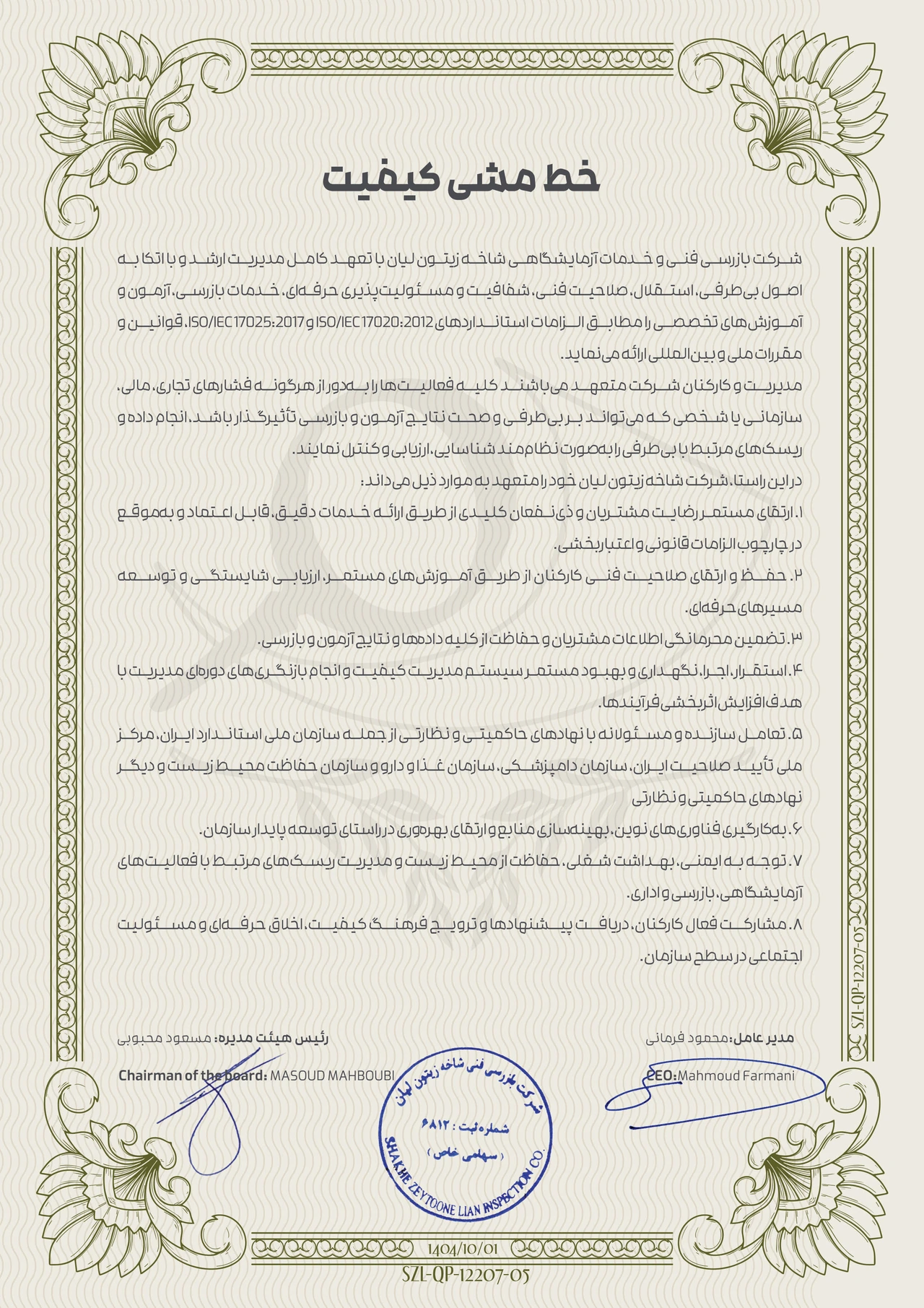
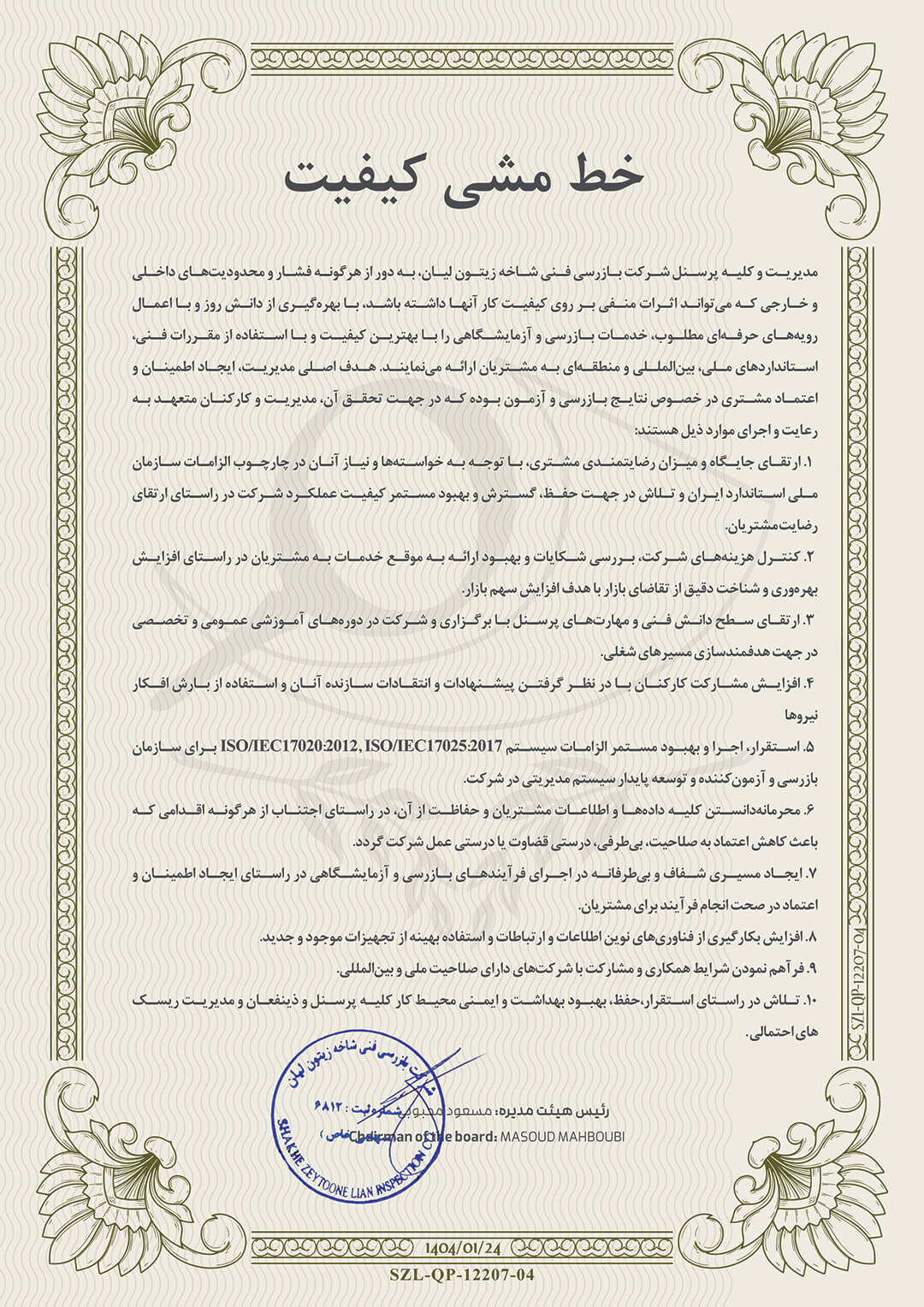
12207 05 خط مشی کیفیت
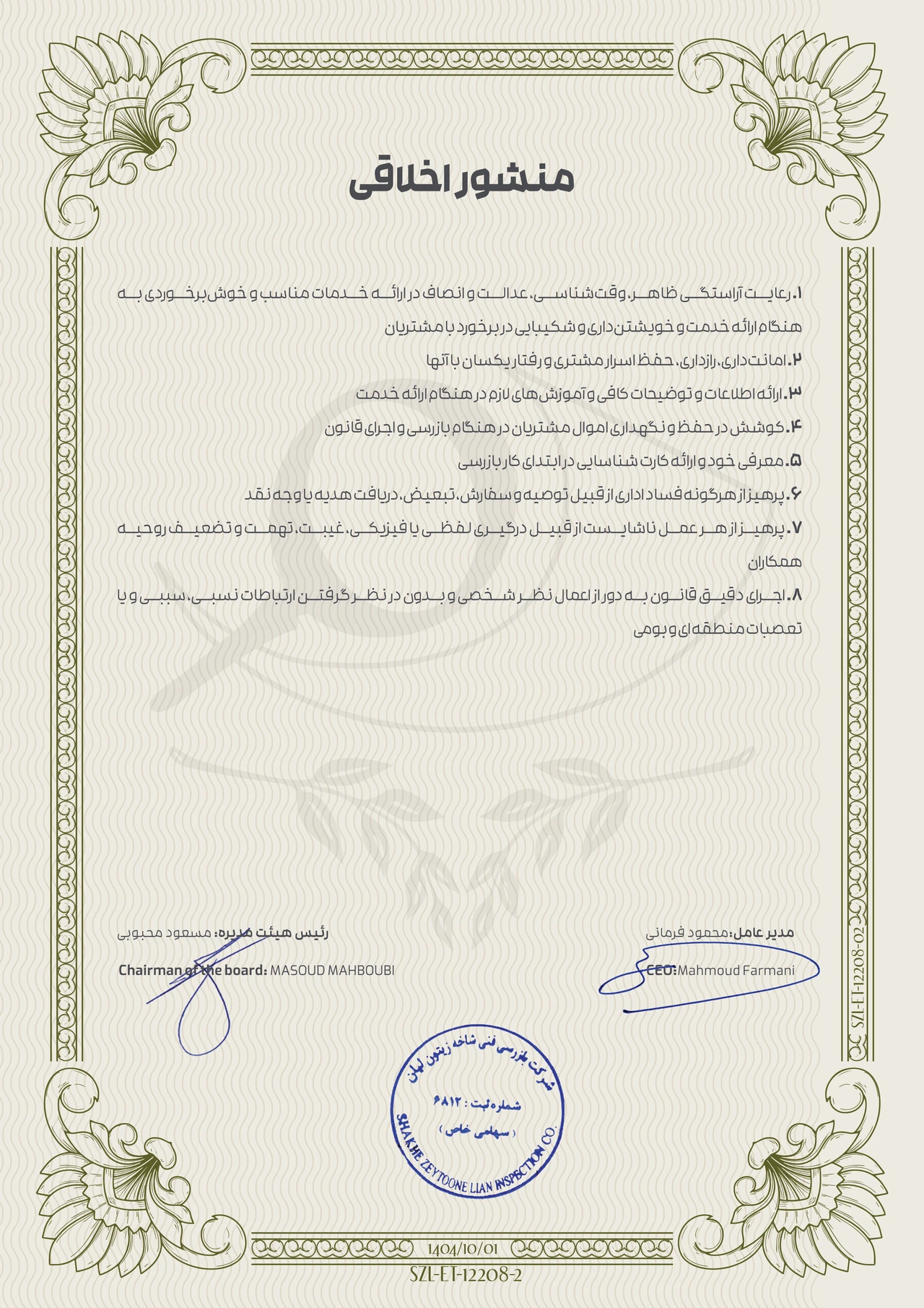
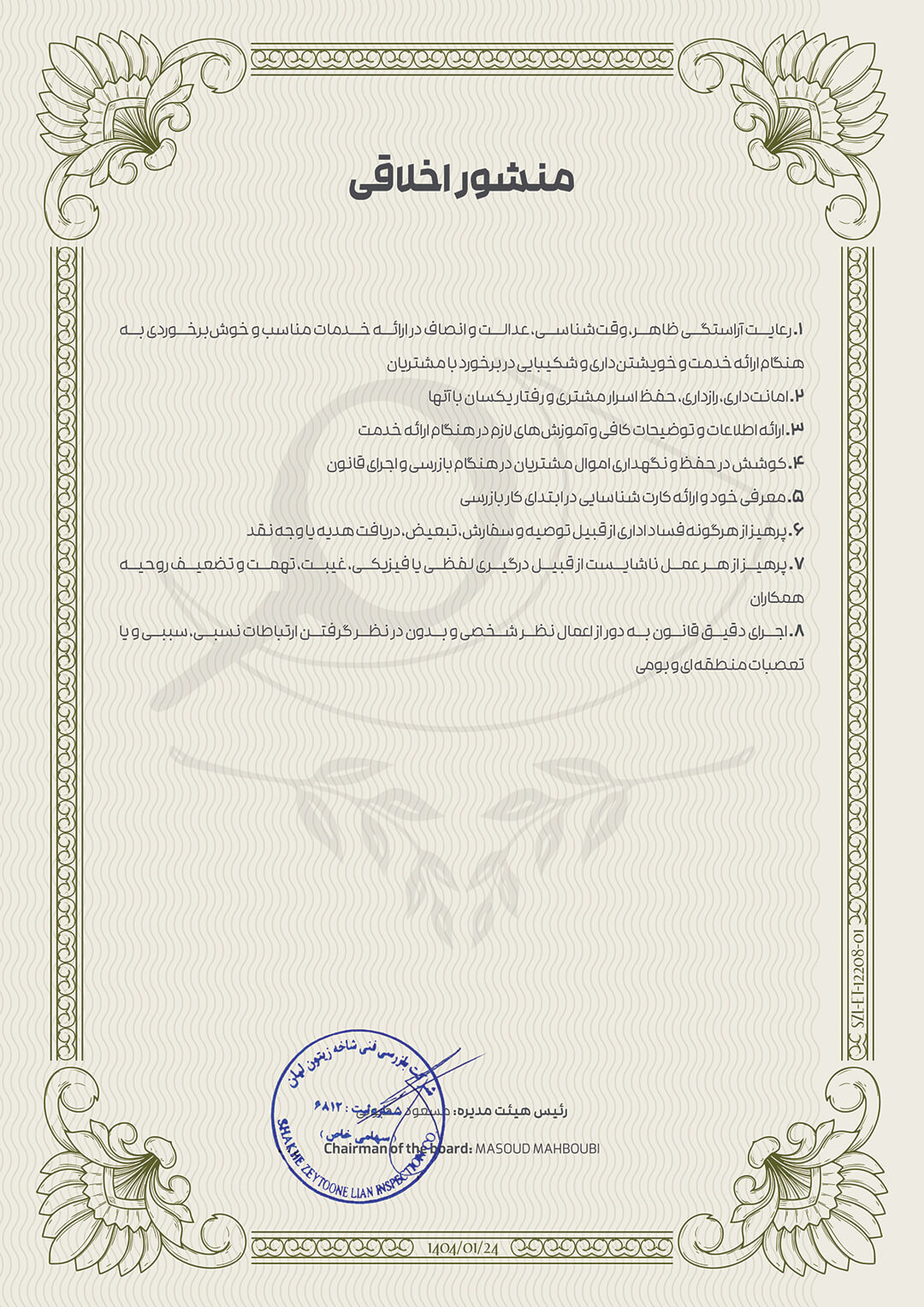
12208 02 منشور اخلاقی
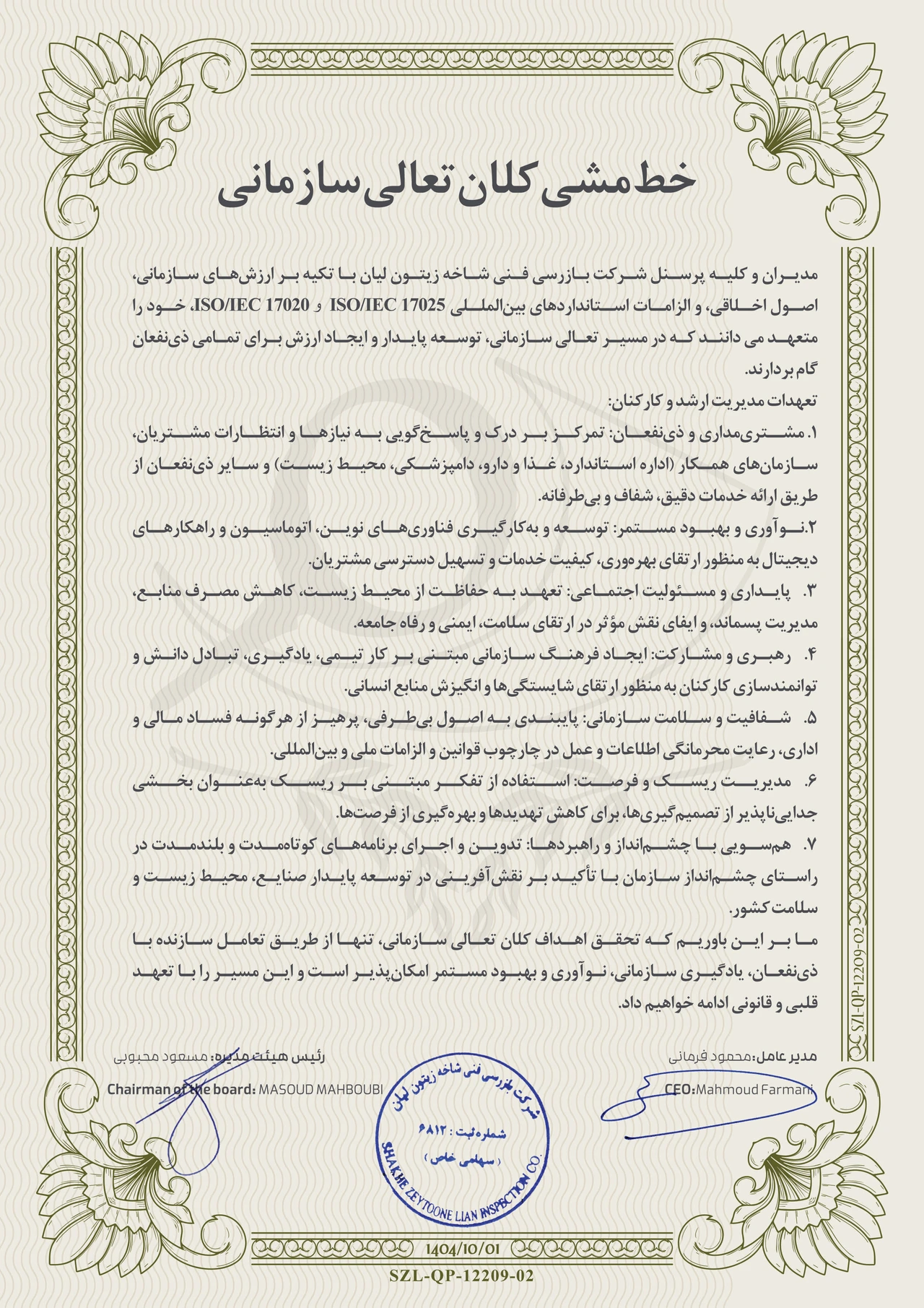
12209 03 خط مشی کلان تعالی سازمان
منشور اخلاقی
خط مشی ایمنی
خط مشی کیفیت
بیانیه حفاظت از بی‌طرفی
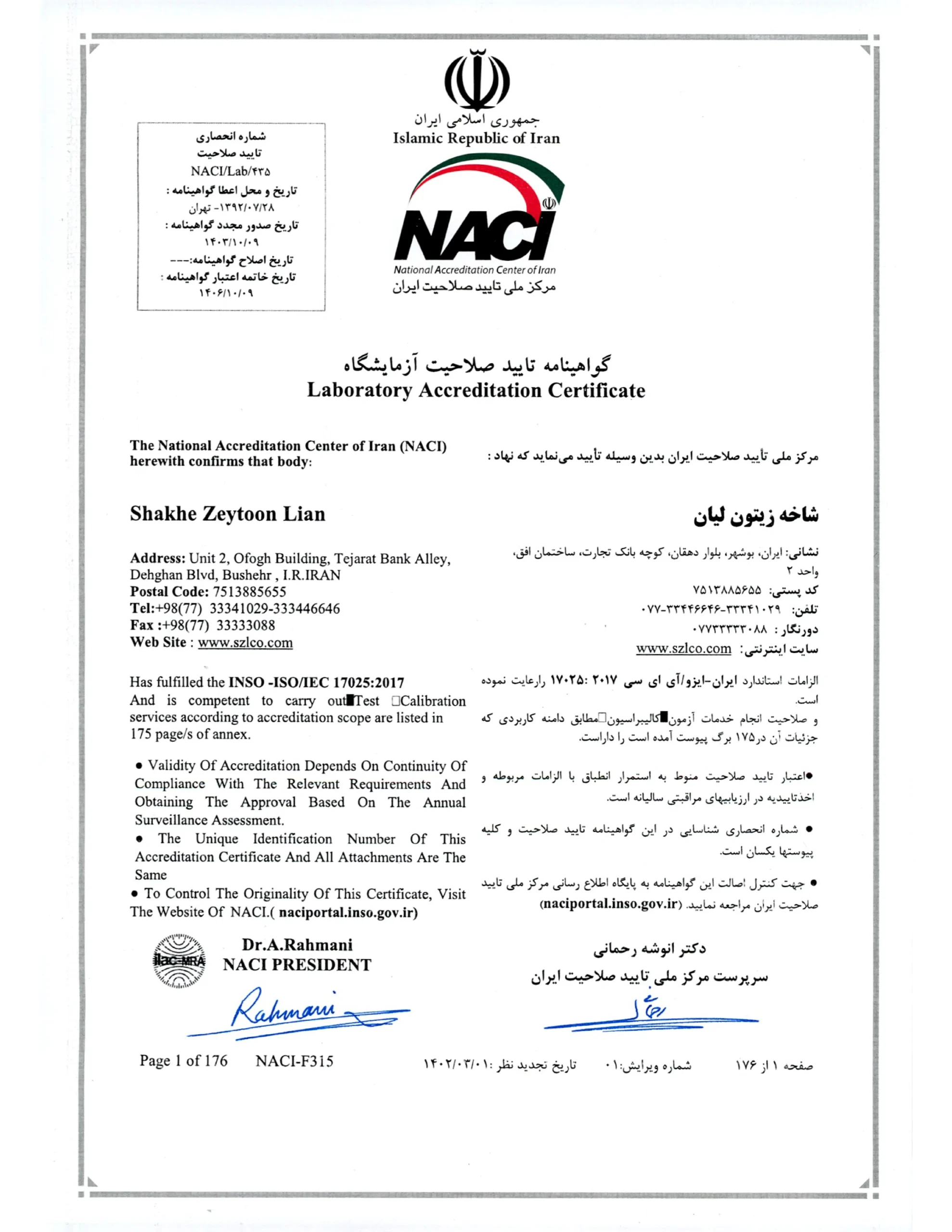
17025 scaled
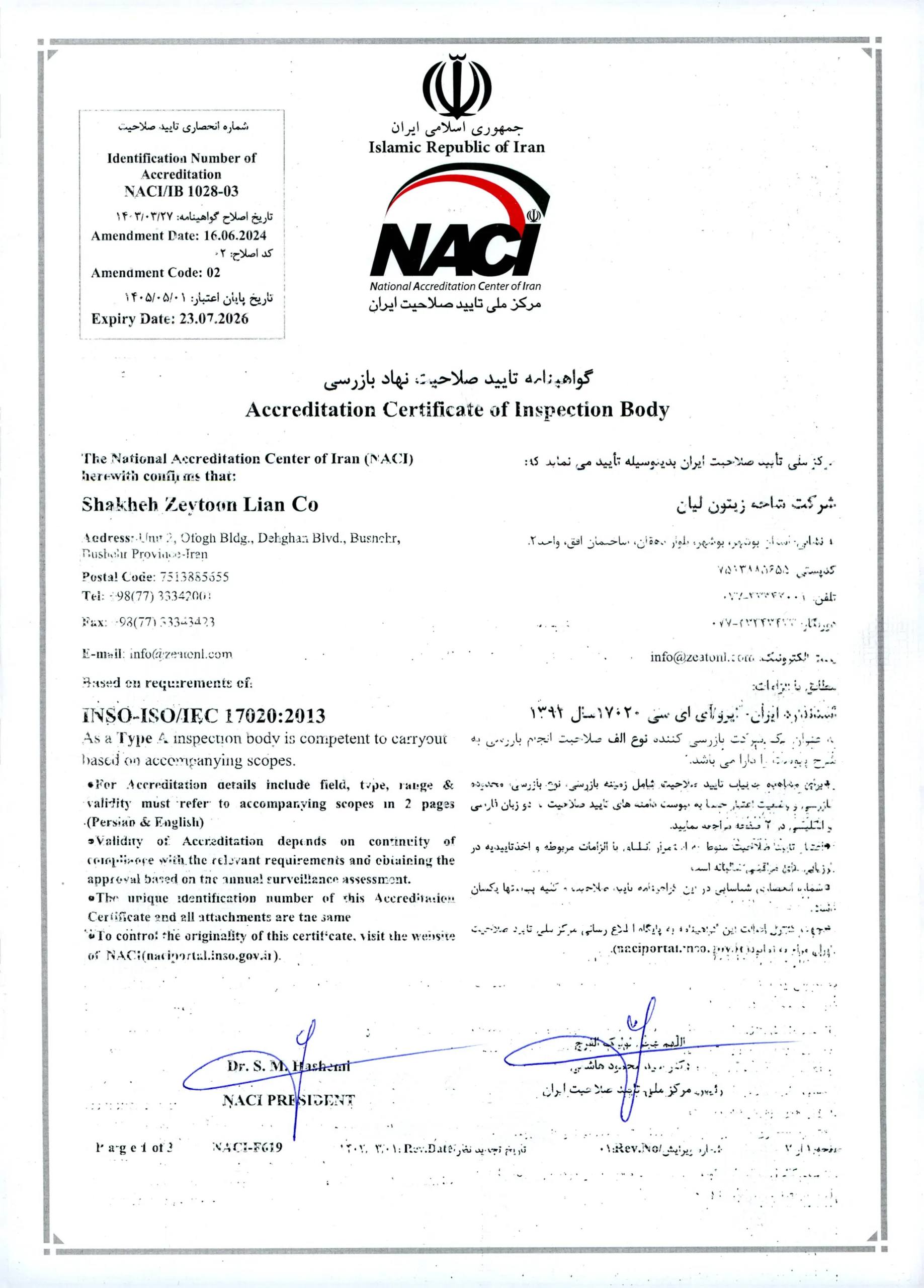
17020 scaled
Download the complete certificates in PDF format

Policy Statement

The management and all employees of Shakheh Zeytoon Lian Technical Inspection Company provide inspection and laboratory services to customers at the highest quality level, free from any internal or external pressure or restrictions that could adversely affect the quality of their work, by applying up-to-date knowledge, sound professional practices, and the relevant Iranian national standards (ISIRI). The primary objective of management is to establish confidence and trust in the results of inspections and tests. To achieve this objective, management and employees are committed to observing and implementing the following:

  • Enhancing the company’s position and customer satisfaction by addressing customers’ requirements and needs within the framework of the requirements of the National Standardization Organization of Iran, while continuously maintaining, expanding, and improving the quality of the company’s performance to increase customer satisfaction.
  • Working to control costs for the company and its customers and improve service delivery times in pursuit of added value and productivity, while identifying and estimating market demand with the aim of increasing the company’s market share.
  • Enhancing employees’ technical and communication knowledge and skills through participation in and delivery of training programs, while providing structured career development paths.
  • Increasing employee participation by considering their constructive suggestions and feedback and making effective use of team brainstorming.
  • Establishing, implementing, and continually improving the requirements of ISO/IEC 17020:2012 and ISO/IEC 17025:2005 for the inspection body.
  • Maintaining the confidentiality and protection of all customer information and avoiding any action that could undermine confidence in the company’s competence, impartiality, sound judgment, or integrity.
  • Establishing transparent inspection and laboratory processes to provide customers with confidence and assurance in the proper and reliable execution of each process.
  • Expanding the use of modern information and communication technologies and making optimal use of available equipment.
  • Creating opportunities for cooperation and partnership with organizations holding national and international competence and accreditation.

Corporate Social Responsibility

Corporate Social Responsibility (CSR), also referred to as the social responsibility of companies or organizations, is a field within business ethics concerned with the role of companies in society. Corporate social responsibility encompasses the duties and commitments a company undertakes to preserve, care for, and contribute to the community in which it operates. CSR is generally divided into three categories:

Environmental Social Responsibilities:

Under this category of social responsibility, the company places a significant focus on protecting the environment and natural resources.

Philanthropic Social Responsibilities:

Under this category of CSR, the company recognizes its responsibility to provide social services and address social challenges, and works to address such challenges through various campaigns.

Ethical Social Responsibilities:

At this level, the ethical dimension of social responsibility is of greater importance. These responsibilities include providing employees with higher compensation through enhanced benefits and bonuses, creating opportunities for unemployed individuals, avoiding business relationships with companies with negative records or reputations, and similar measures.

Partners and Trusted Organizations